
Iron casting is one of the oldest and most widely used metal manufacturing processes. It is used to produce components for automotive systems, construction machinery, agricultural equipment, industrial machinery, pipe systems, and many other applications. Its ability to produce complex shapes, accommodate a wide range of sizes, and work with different iron alloys makes casting an important manufacturing option for both standard and custom components.
For manufacturers and OEM buyers, understanding the basics of iron casting can help when selecting materials, evaluating suppliers, and deciding which casting process is suitable for a particular component.
What Is Iron Casting?
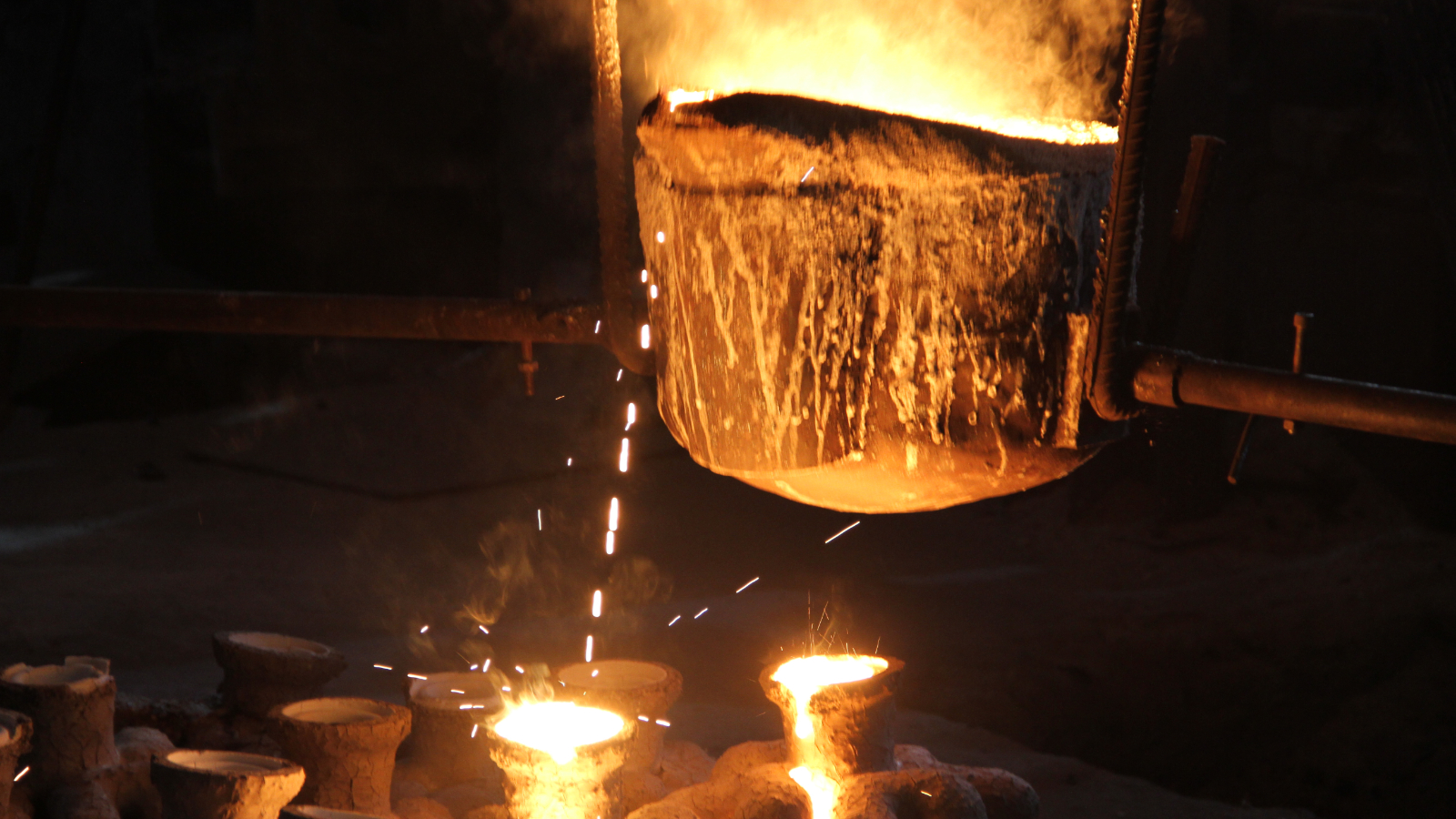
Iron casting is a manufacturing process in which molten iron or an iron alloy is poured into a mold and allowed to solidify into the required shape. After solidification, the casting is removed from the mold and subjected to finishing operations such as cleaning, heat treatment, machining, surface treatment, and inspection.
The term “iron casting” covers several different materials rather than one specific type of metal. Cast iron alloys are generally based on iron, carbon, and silicon, with other alloying elements added to achieve particular mechanical or physical properties.
Compared with steel casting, cast iron generally contains a higher carbon content. This difference has a significant effect on its machinability, wear resistance, vibration damping, strength, and casting characteristics.

Common Types of Cast Iron
Different cast iron grades are selected according to the requirements of the finished component.
Gray iron is one of the most commonly used cast irons. Its graphite structure gives it good machinability and excellent vibration-damping characteristics. It is widely used for machine bases, housings, engine components, brake components, and other industrial parts where high ductility is not the primary requirement.
Ductile iron, also known as nodular or spheroidal graphite iron, contains graphite in a different form from gray iron. This gives it significantly improved strength and ductility while retaining many of the casting advantages of cast iron. Ductile iron is commonly used for automotive components, gears, hubs, pipe fittings, valve bodies, and heavy machinery parts.
Compacted graphite iron, sometimes called CGI, has graphite in a compacted form. Its properties fall between those of gray iron and ductile iron, providing a combination of strength, thermal conductivity, and vibration damping. It is particularly useful for demanding engine and industrial applications.
Malleable iron is produced through heat treatment of a suitable cast iron structure. It offers improved ductility and toughness and has traditionally been used for fittings, brackets, hardware, and mechanical components.
The appropriate grade depends on factors such as required strength, elongation, wear resistance, operating temperature, machinability, and application conditions.
How Does the Iron Casting Process Work?
The process begins with material preparation. Iron and selected alloying elements are melted in a furnace until the required chemical composition and pouring temperature are reached. The molten metal is then tested and adjusted before casting.
At the same time, a mold is prepared based on the component’s geometry. Sand molds are particularly common for iron castings because they can accommodate complex shapes and a broad range of component sizes.
The molten iron is poured into the mold through a carefully designed gating system. As the metal cools, it solidifies and takes the shape of the mold cavity. The casting is then removed from the mold, and excess material such as gates and risers is removed.
Additional processes may include shot blasting, grinding, heat treatment, dimensional inspection, hardness testing, machining, and surface finishing. For components with tight dimensional requirements, CNC machining can be integrated after casting to achieve the required final dimensions and tolerances.
Iron Casting Methods
Several casting methods can be used for iron components. The most appropriate method depends on the part’s geometry, dimensions, material requirements, production volume, surface finish, and dimensional accuracy.
Sand casting is one of the most widely used methods for iron castings. It is suitable for both relatively simple and highly complex components and can be used for small, medium, and large parts. Because tooling costs can be relatively economical, sand casting is also suitable for many low- and medium-volume OEM projects.
Investment casting uses a disposable wax pattern to create a highly detailed mold. It is generally selected when complex geometries, thin sections, and good dimensional accuracy are important. However, investment casting is more commonly associated with steel and non-ferrous alloys than with conventional large iron castings.
Other specialized casting processes may be used depending on the material and component requirements. The casting supplier should evaluate the geometry and technical requirements before recommending a process.
Advantages of Iron Casting
Iron casting offers several important manufacturing advantages. Molten iron can be formed into relatively complex geometries that would require multiple operations if produced from solid material. This makes casting particularly useful for housings, brackets, machinery bodies, valve bodies, automotive components, and other irregularly shaped parts.
Cast iron also offers useful material characteristics. Gray iron provides excellent vibration damping and machinability, while ductile iron provides a combination of strength and ductility that makes it suitable for more demanding mechanical applications.
Casting can also be economical for components that would be expensive to manufacture entirely through machining. Instead of removing large quantities of material from a solid block, casting produces a near-net-shape component that requires machining only where necessary.
Iron Casting vs. Steel Casting
Iron casting and steel casting are related processes, but the materials have different characteristics.
Cast steel generally provides higher tensile strength and toughness, making it suitable for applications requiring significant mechanical performance and impact resistance. Cast iron, depending on the grade, can offer excellent machinability, wear resistance, vibration damping, and casting performance.
The choice between cast iron and cast steel should therefore be based on the actual requirements of the component rather than simply choosing the material with the highest nominal strength.
Conclusion
Iron casting remains an important manufacturing process because it combines material versatility, design flexibility, and efficient production for a wide range of components. Gray iron, ductile iron, compacted graphite iron, and other cast iron grades provide different combinations of mechanical and physical properties, while processes such as sand casting can accommodate everything from relatively simple parts to large and complex industrial components.
For OEM buyers, successful iron casting is not simply a matter of pouring molten metal into a mold. Material selection, casting design, process control, inspection, machining, and finishing all contribute to the performance and consistency of the finished component. Understanding these factors makes it easier to select the appropriate casting process and develop a reliable manufacturing solution.